Events

Teresiano-Sanjuanistas Conference (held October-November)

Beas de Segura annually hosts the “Teresiano-Sanjuanistas” conference. Several days where the municipality hosts conferences, presentations, as well as screenings related to the life and work of Teresa de Jesús and Saint John of the Cross.

The Conference is usually held in the third quarter of the year (October-November), for three or four days a year.

The activities have different schedules, so you have to consult the program, but they are an excellent pretext to visit Beas de Segura.

Address:

Paseo de la Constitución, 1, CP 23280 Beas de Segura (Jaén).

Geolocation: Latitude: 38.252435, Longitude: -2.889907

Organizing entity: Beas de Segura City Council.

Information: 953 42 40 00
http://www.beasdesegura.es/

No category

Way of San Juan de la Cruz

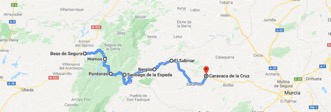
The Way of Saint John of the Cross is a pilgrimage route that begins in Beas de Segura and concludes in Caravaca de la Cruz.

The Way originates from the beginning of 2016, at the initiative of the Discalced Carmelites of Caravaca, with the support of the Discalced Carmelites of Beas, to promulgate the heritage, landscape and ethnographic legacy of those villages it crosses and bring tourists or pilgrims closer to his message, his mystique and his poetry.

A pilgrimage route of 151 km, performed by the Saint as Vicar and confessor of the Carmelite convents.

The Way runs through the old communication routes from the 16th century and its purpose is to promote tourism and culture of the figure of Saint John of the Cross. The municipalities that belong to the Camino are Beas de Segura, Hornos de Segura, Santiago-Pontones, Nerpio, Moratalla and Caravaca de la Cruz.

The tourist and pilgrimage routes are configured with beginning and end in the municipalities of Beas de Segura and Caravaca de la Cruz, and vice versa, linking the religious, cultural, historical and literary heritage of each municipality around Saint John of the Cross, with the intention that the tourist or pilgrim travels all the localities on the route.

No category

Plaza del Pópulo / Plaza de los Leones( The…

As with the Plaza de Santa María, Federico García Lorca describes the Plaza del Pópulo or de los Leones in an admired and somber way, lamenting the abandonment in which it is found.

LOST CITY (BAEZA) I Baeza

(…) In a serene square, which has an elegant but mutilated and shattered little palace, a graceful altar with rag flowers next to the aristocratic seriousness of a triumphal arch with a warrior’s air, and a fountain with lions blurred in the stone ( …)

The Plaza del Populo was one of the most important squares in Baeza, which housed the main public buildings. In this square there were institutions such as the Old Butchers -current seat of the courts-, the Civil Court and Public Notaries or Pópulo House -current Tourist Office-, the Arch of Villalar, the Puerta de Jaén or the Fuente de los Leones , named for the ornamental elements in the shape of a lion from which the water gushed out and that apparently come from the Ibero-Roman ruins of Cástulo, which today is in question, because for experts in Iberian sculpture its siliceous stone carving and its formal appearance suggest a much more modern chronology.

No category

Convent-College of Carmen-San Basilio

As you can see, the name of the Convent-College can be misleading: del Carmen or San Basilio? The reason is because, although the convent was called Nuestra Señora del Carmen, the popular name could be San Basilio because he is the patron of the College:

“Note that this school from the day it was founded was given as Patron Saint Basilio and has Nuestra Señora del Carmen as title, and yet many call it San Basilio for not distinguishing between Patron and Title”

“Estudios Joselinos” 46, 1992, pp. 15-25, taken from GABRIEL BELTRÁN O.C.D . Testament of Fray Gregorio de San Angelo, in “Saint John of the Cross” No. 12, 1993, pp. 279-291.

The convent of Nuestra Señora del Carmen in Baeza is where Saint John of the Cross founded the first Colegio Mayor of the Barefoot Order, which was intended to be established in localities with training centers (remember that Baeza was a university headquarters) so that better prepared vocations could emerge.

The mystical poet remained in this city of Jaén until 1582 as rector of the Colegio Mayor, a position that shows the public recognition of his high intellectual level, although he personally refused to teach at the university.

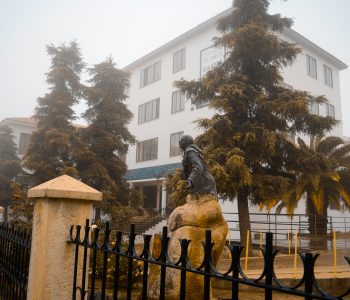
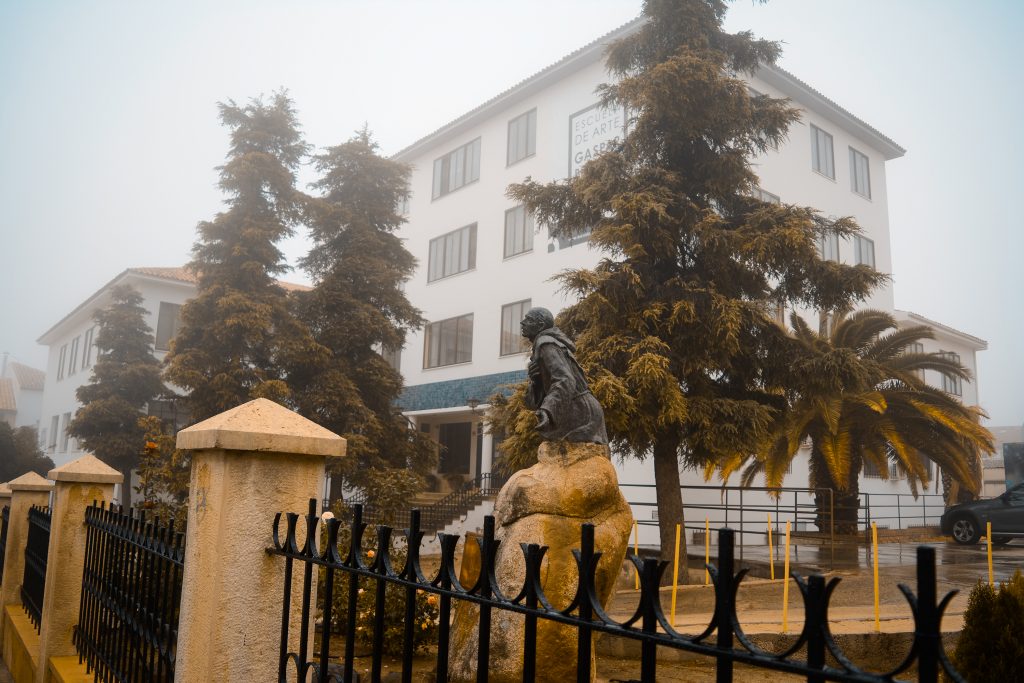
Unfortunately, the original building was torn down in years sixties of the twentieth century to build the new building that currently belongs to the School of Arts and Crafts of the city, with no vestige left of the place of such great importance. Except for a statue dedicated to the Saint in the entrance garden to the School of Arts and Crafts.

No category

Vicar’s House

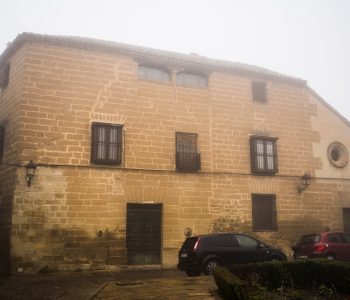
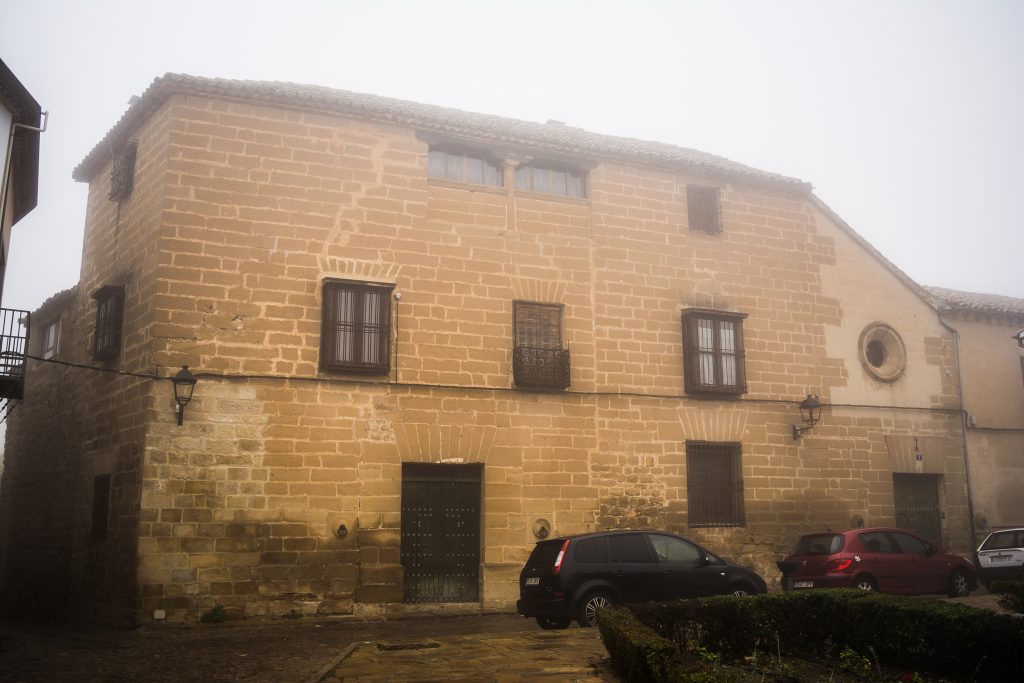
Saint John of the Cross resided in the so-called house of the Vicar throughout his stay in Baeza, until 1582. This house, which is still preserved, was the first house in which the Carmelites lived when they arrived in the city, to immediately move to the houses of Juan de Escos, in La Calancha, and later in the new convent (Convento de Nuestra Señora del Carmen). It has a backyard closed by the city wall.

No category

Museum of San Juan de la Cruz

The Museum of Saint John of the Cross, is the only existing one in the world dedicated to his figure, it was inaugurated in 1978 in the premises of the convent of San Miguel de los Carmelitas Descalzos, where the mystical poet went to get cured of the “fever” :

(…) “I received here in La Peñuela the batch of letters that the servant brought me. I am very careful. Tomorrow I am going to Úbeda to heal from some fever, for which, (as there have been more than eight days that they give me every day and they do not cease) it seems that I will need medical help “(…).

This Carmelite convent was founded in 1587, under the invocation of San Miguel, patron of the city, as a result of the impulse that the Order of Carmel will receive from the hands of Saint Teresa of Jesus. Saint John of the Cross remains here from September 28 until his death in a poor cell at midnight between December 13 and 14, 1591.

In 1627, an Oratory was attached to the convent to house the tomb of Saint John of the Cross, being the first temple in the Catholic world built in his honor. It is thought that the Oratory is located in the same space as the cell where the Saint died, and there is an inscription on the façade that recalls this fact.

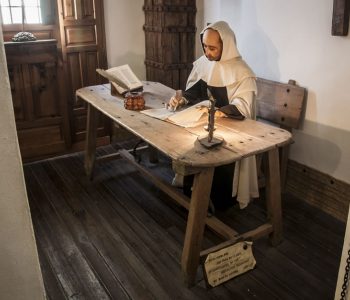
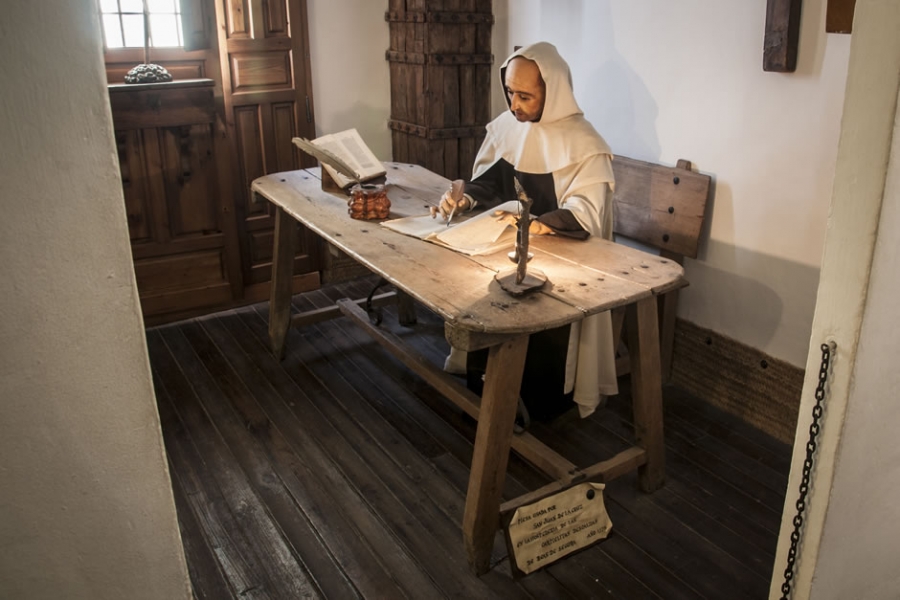
The Saint John of the Cross Museum is made up of various rooms, where the old Conventual Sacristy stands out, with various relics of the Saint, such as two fingers of his right hand and which are one of the main attractions of the Oratory. In other rooms, other spaces and objects that were related to the Saint are shown (iconography, the cell where he died, writings, etc.). The Museum has also been enriched with a notable library specialized in Saint John and spirituality issues.

No category

Monument to San Juan de la Cruz

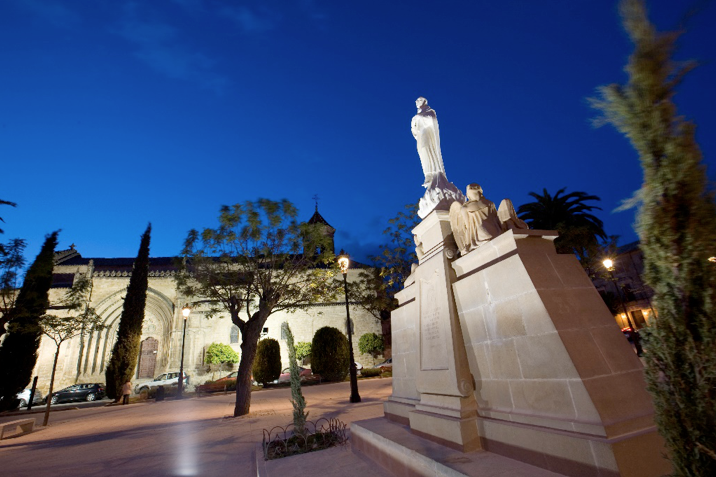
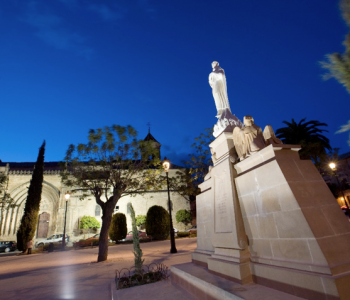
The monument to Saint John of the Cross stands very close to the museum, in the Plaza Primero de Mayo (First of May Square).

A monument in the form of a sculpture, made of polished white marble and limestone, which is the work and donation of the Malaga native sculptor Francisco Palma Burgos.

It was inaugurated on November 24, 1959, and in that year various events were held in honor of the Saint.

The monument, in perfect harmony with the square and the Church of San Pablo, was not the original idea. There was another more ambitious project, whose model you will be able to contemplate. But that is something you have yet to discover.

Puente Ariza (Ariza Bridge)

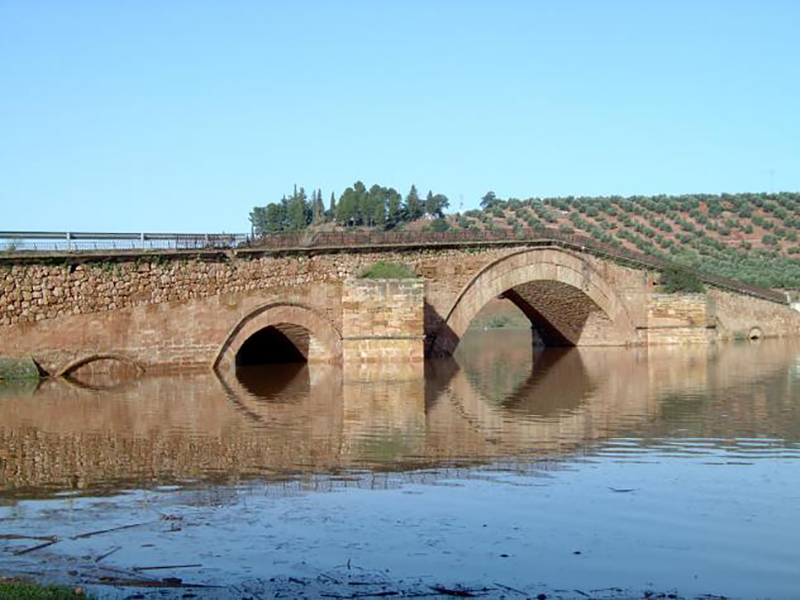
The Ariza Bridge, projected by the illustrious architect Andrés de Vandelvira, under the direction of works by the stonemason Antón Sánchez, from Úbeda and financed by the Bishop of Jaén, Don Diego de los Cobos de Molina, was built on the Guadalimar river and has great importance important because it was the main communication route between Úbeda and La Peñuela (La Carolina), so it was an obligatory passage from Saint John of the Cross to access the city where he went to “get cured of fever.”

The bridge, remarkable in itself because it is a masterpiece of Vandelvira´s civil engineering, for the treatment of the ashlars, the size of the main arch and its fit in the landscape, has a length of 99.5 meters and has been declared Cultural Heritage, in the category of Monuments, on February 4, 1993.

Since 1998 it has not been passable, as a consequence of the Giribaile Swamp coming into operation, being partially submerged under the waters and emerging in periods of drought.

No category

Ariza bridge

El Puente Ariza, proyectado por el ilustre arquitecto Andrés de Vandelvira, bajo la dirección de obras del cantero Antón Sánchez, de Úbeda y financiado por el Obispo de Jaén, don Diego de los Cobos de Molina, está construido sobre el río Guadalimar y cobra importancia porque se trataba de la principal vía de comunicación entre Úbeda y la Peñuela (La Carolina), por lo que fue paso obligado de San Juan de la Cruz para acceder a la ciudad a la que acudió a “curarse de unas calenturillas”.

El puente, importante en sí mismo por ser una obra cumbre de la ingeniería civil de Vandelvira, por el tratamiento de los sillares, el tamaño del arco principal y su encaje en el paisaje, tiene una longitud de 99,5 metros y es Bien de Interés Cultural, en la categoría de Monumento, desde el 4 de febrero de 1993.

Desde 1998 no es transitable, como consecuencia de la entrada en funcionamiento del Pantano de Giribaile, quedando sumergido parcialmente bajo las aguas y emergiendo en periodos de sequía.

No category

«Santísima Trinidad» Institute of Baeza

The “Santísima Trinidad” Institute of Baeza is where Machado takes possession of the French language chair, then called the General and Technical Institute.

The institute belongs to the Lorca itinerary because it was an obligatory meeting point on Martín Domínguez Berrueta’s study trips to Baeza, as evidenced by photographs by the professor of Theory of Arts and Literature at the University of Granada. Leopoldo Urquía, director of the institute with his daughter Paquita, whose sister Lorca dedicates Ciudad Perdida to, also appears in some of them. Thus, the young Lorca visited the Institute on his study trips.

The Institute, which currently belongs to the Andalusian Historical Educational Institutes Network, is located in the former Renaissance headquarters of the old University of Baeza. It still conserves intact the classroom where Machado taught his classes and in which furniture, belongings and documentation related to the life of the Sevillian poet as a teacher are exposed: old desks, teacher’s chair with brazier, wooden coat rack, umbrella …

No category

Jabalquinto palace

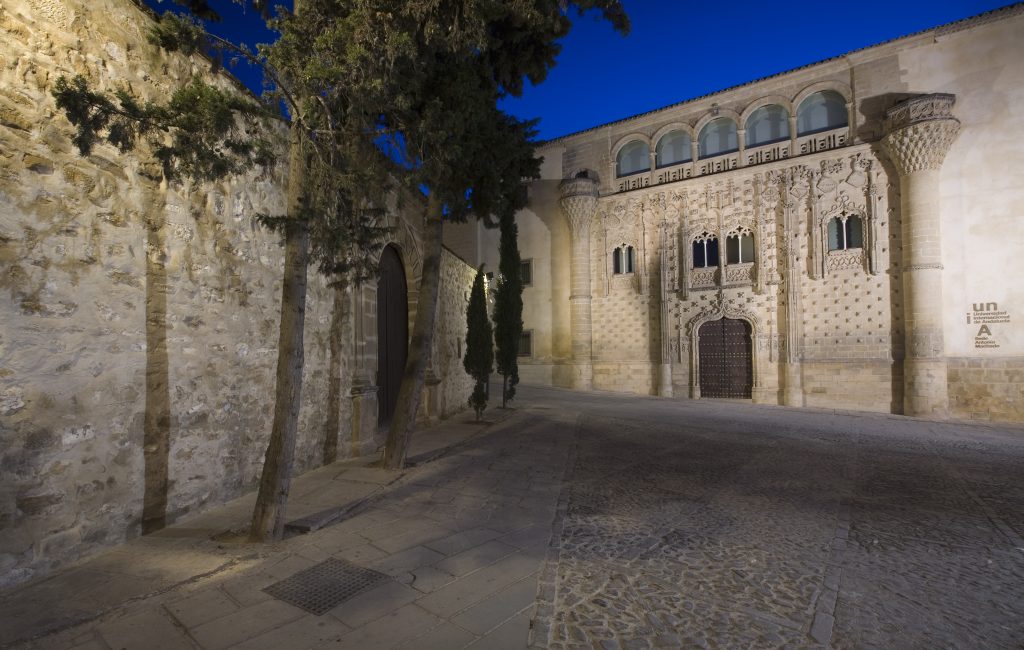
The Jabalquinto Palace belongs to the interesting Lorca itinerary because it was one of the spaces visited by Federico García Lorca in Baeza, as specified by Rafael Laínez Alcalá, Machado’s student at the General and Technical Institute:

“(…) I saw a group of strangers accompanied by the archpriest of the Baezana cathedral (…) who were contemplating the façade of the Seminary, the old palace of Jabalquinto (…) Among the boys (…) Federico García Lorca, whom a few years later I would meet in Madrid. (…) “

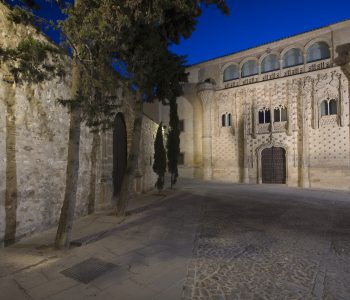
At that time, the Palace belonged to the Seminary of San Felipe Neri, where future priests were trained. It is currently the headquarters of the International University of Andalusia (UNIA), an institution to support the Andalusian science and technology system in postgraduate training, research, knowledge transfer, digitization, permanent training and internationalization. In homage to Antonio Machado, the UNIA headquarters in Baeza bears his name. The UNIA is based in two buildings: the Old Conciliar Seminary, a baroque building located in the Plaza de Santa María, opposite the Cathedral and the Renaissance Jabalquinto Palace, a benchmark of the Renaissance civil architecture of Baeza, with an impressive main façade with Elizabethan Gothic decoration, beautiful windows and prominent diamond points.