Guided visits

Guided tour of the route of Jorge Manrique

In Segura de la Sierra you can immerse yourself in the world of Jorge Manrique by the hand of Olivair, who will prepare a personalized itinerary so that you can know all the Manrique places in town where he was born: the viewpoint, his statue, his family’s house and the castle with the Interpretation Center. Recited and dramatized visits available on request.

Write down the contact information:

Olivair Active and Cultural Tourism (Segura de la Sierra) / 627 87 79 19 / dani@olivair.es / http://www.olivair.org

In Chiclana de Segura you can contact the City Council and the Association for Rural Development of the El Condado Region (ASODECO) to visit the Jorge Manrique Interpretation Center.

Guided visits

Guided tour of the route of San Juan de…

In Beas de Segura, the Town Hall itself, through the local guide, offers a complete guided tour (shared with Saint Teresa of Jesus) that includes an interesting tour: Monastery of San José del Salvador, Interpretation Center of the Villa de Beas, el Siglo XVI and the Mystic and Clock Tower.

Write down the contact information:

Beas de Segura Town Hall/ 673 73 20 29 / 649 29 82 61 / turismobeas@gmail.com / http:// www.turismobeasdesegura.es

Artificis Tourist and Cultural Services, carry out, in Úbeda, a themed visit on Saint John of the Cross where you can visit the Saint John of the Cross Museum – the only one in the world -, the Sacred Chapel of the Savior or the permanent exhibition “The Treasures of the Clausura” . They are great connoisseurs of the mystical poet who participate annually in the

Teresiano-Sanjuanistas Days that are celebrated in Beas de Segura, as well as in the Sanjuanista Week of Úbeda.

Write down the contact information:

Artificis Tourist and Cultural Services (Úbeda) / 953 758 150 / info@artificis.com / http: // www.artificis.com

In Andújar you can contact the tourism area of ​​the City Council and the Parish of Santa María la Mayor, which is where you can find the codex.

Write down the contact information

Andújar Tourist Office / 953 50 49 59 / turismo@andujar.es / http:// www.turismodeandujar.com

Santa Maria la Mayor Church (Andújar) / 953 50 01 39 /

Guided visits

Guided tour of the route of Santa Teresa de…

In Beas de Segura, the Town Hall itself, through the local guide, offers a complete guided tour that includes an interesting journey about the life and work of the mystics Saint Teresa of Jesus and Saint John of the Cross, as well as their stay in Beas de Segura: Monastery of San José del Salvador, Interpretation Center of the Villa de Beas, the 16th century and the Mystic and Clock Tower.

Write down the contact information: Beas de Segura City Council / 673 73 20 29 / 649 29 82 61 /

turismobeas@gmail.com / http:// www.turismobeasdesegura.es

No category

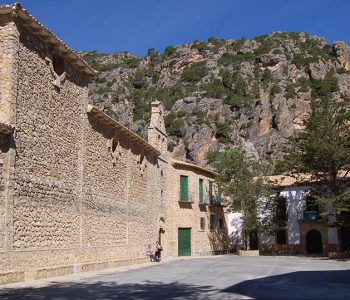
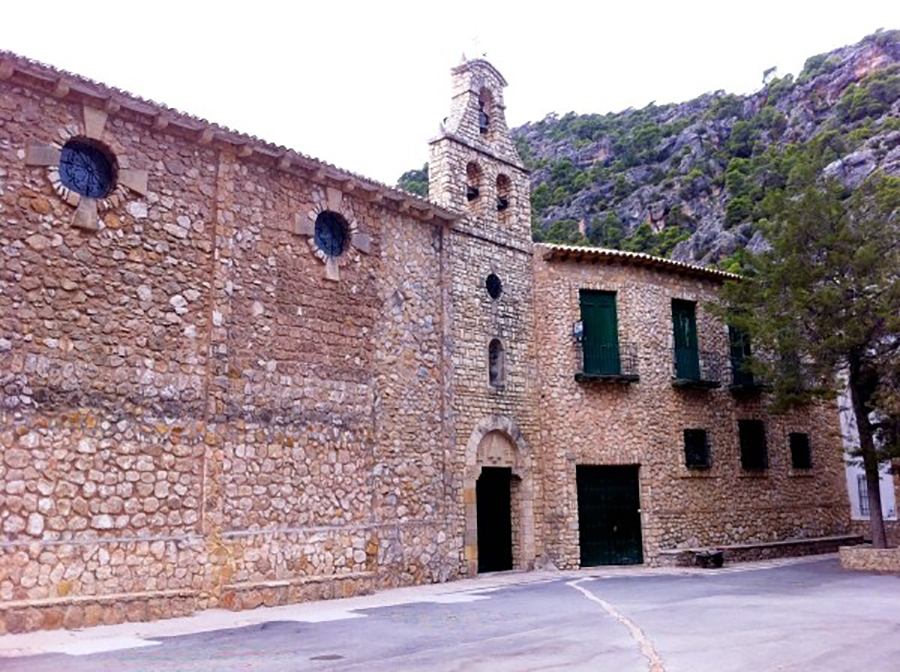
Sanctuary of the Virgin of Tíscar

Antonio Machado visited the Sanctuary of the Virgin of Tíscar, Patron Saint of Quesada, on excursions to the springs of the Guadalquivir.

The Sanctuary is located fourteen kilometers from the town, at the foot of the Peña Negra, with access through a winding mountain road. The Sanctuary has been a pilgrimage site for centuries (the current building that houses the Sanctuary was rebuilt throughout the 20th century on the remains of a primitive medieval hermitage). Inside the temple we will find the image of the Virgin of Tíscar, carved by the sculptor Jacinto Higueras.

In recent years the City Council of Quesada has been holding concerts of different musical genres on the first Saturday in August in the Esplanade of the Sanctuary. In addition, the villages of Tíscar, Belerda and Don Pedro celebrate the Fiesta de los Cargos or Dios Chico during December 26, 27 and 28.

Inside the Sanctuary, on the entrance esplanade to the temple, in homage to Antonio Machado, there is a stone poem dating from 1959 that refers to the Cordillera or Cuerda de los Agrios, a mountain thorn that collapses over the port from Tíscar and which runs parallel to the Cabañas hill, one of the main heights of the Sierras de Cazorla, Segura y las Villas Natural Park:

CLXVI
Old Songs
IV
In the mountains of Quesada

there is a giant eagle that is

greenish, black and gold,

with its wings always open.

It’s of stone and never tires.

(…)

The remains of the rock castle, built in the fourteenth century under Christian rule stand above the Sanctuary, in the Peña Negra, of which only the donjon is preserved. Cueva del Agua -declared Natural Monument of Andalusia by the Junta in April 2019-, is few meters down the road, with waterfalls and spectacular cascades, considered one of the most dazzling geological wonders of the province of Jaén, and which, without a doubt, Machado visited in his search for the sources of the Guadalquivir.

No category

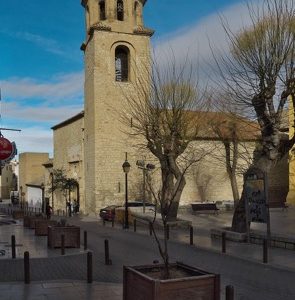
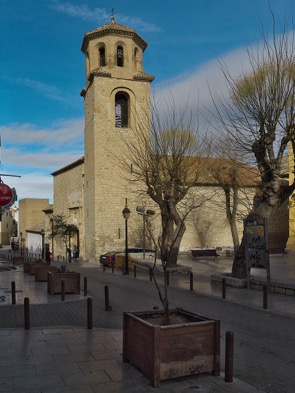
Magdalena Church

The Magdalena Church (originally the mosque of the city, converted into a church after the Christian conquest), is located in the neighborhood of the same name. The church, whose main façade and interior is in the Gothic style, was erected in the 16th century, being one of the oldest churches in the capital of Jaén. In one of the church towers you can still make out the old Arab minaret of the mosque.

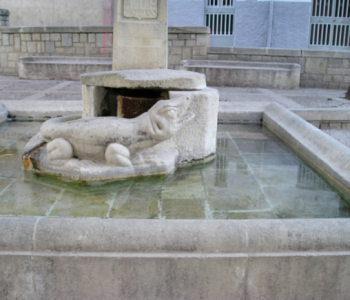
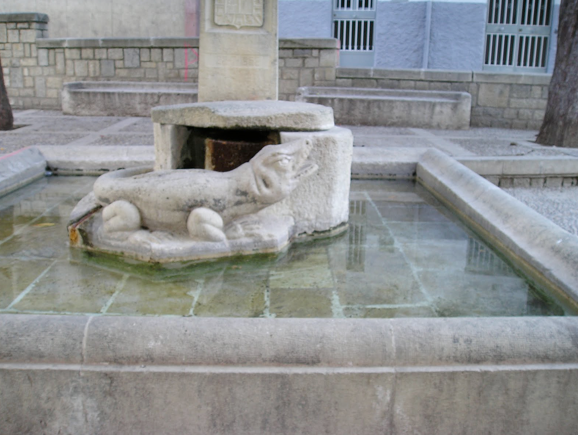
The neighborhood, the fountain, the lizard and, of course, the Magdalena Church are constant literary resources in the work of Juan Eslava Galán.

(…) and thus they took him to a house that is near the said Church of Magdalena (…)

The Templars and the Table of Solomon. Chapter 22

No category

The Institute of Jaen Studies

The Institute of Jaen Studies (IEG), is an Autonomous Body of the Diputación de Jaén that has its headquarters in the Old Hospital of San Juan de Dios de Jaén, a 15th century building, and whose main function is the promotion and study of culture, science and provincial art.

Juan Eslava Galán has given his legacy to this institute. More than 8,000 documents from his personal archive (books, press clippings, videos, sound files and other varied objects) to serve as a reference for people interested in Jaén and in this specific author.

It is worth introducing the IEG in this itinerary if only to consult this extraordinary collection, but the author also takes advantage of any opportunity in his works to praise its history or enhance its resources, as does his wonderful library in The Templars and the Table of Solomon.

(…) I looked for archaeological information about those places in the marvelous library of the Institute of Jaen Studies, installed in an old hospital and Carmelite convent, with the comfortable reading room open to the silent cloister. (…)

The Templars and the Table of Solomon. Episode 2.

No category

Sacred Chapel of El Salvador

La Sacra Capilla de El Salvador del Mundo is an extraordinary funeral pantheon ordered to be built by one of the most important figures of the time, Francisco de los Cobos, personal secretary of Emperor Carlos V.

The pantheon has an important link with the Carmelite reformer because the last and solemn information leading to the beatification of Saint John of the Cross , the greatest and most enlightened of our mystics, was held here. The event occurred on September 6, 1674 by Pope Clement X, although the Decree was not issued until January 25, 1675.

The temple itself is one of the most successful examples of the Spanish Renaissance, where the most illustrious virtuosos of the time worked: Diego de Siloé as the author of the general designs of the temple; the incomparable Andrés de Vandelvira as master builder; Berruguete, author of the altarpiece of the main altar; Esteban Jamete, sculptor of the facade and the sacristy; or Francisco de Villalpando, author of the bars.

No category

Castle of Santa Catalina

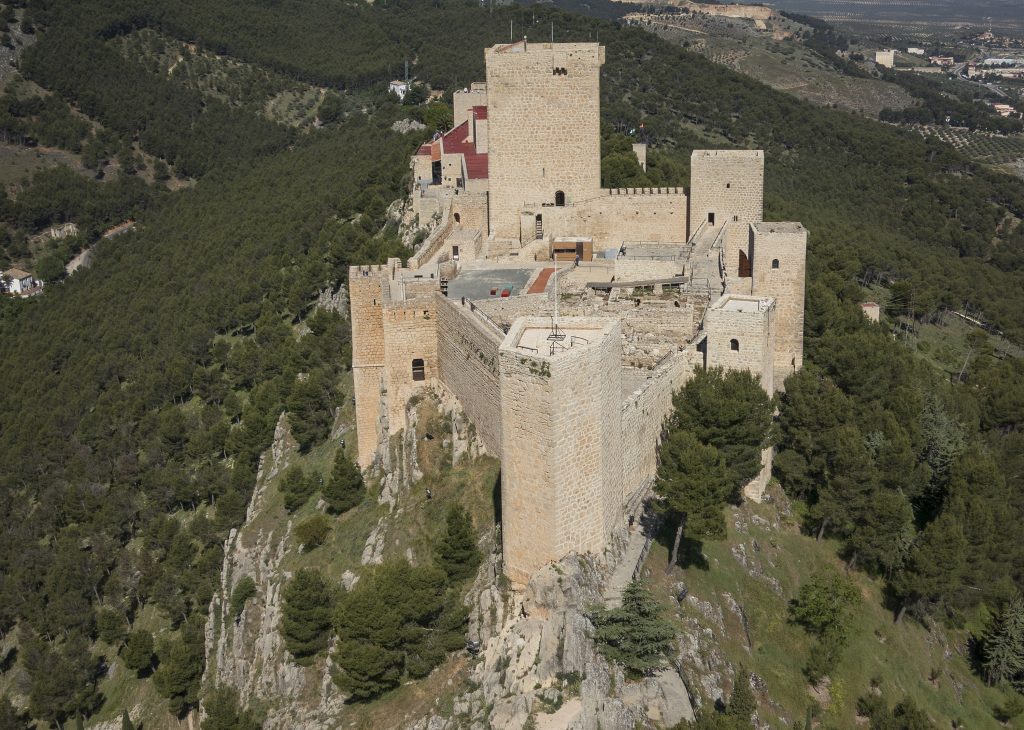
The castle of Santa Catalina, one of the emblems of Jaén, crowns the hill that gives it its name, from where you can see a unique and spectacular landscape of the city and its mountains. It also houses an Interpretation Center which offers a tour of its history.

The origin of the fortress is an old caliphate fortress from the 9th century, the Christian castle that has survived to this day was built in the 13th century. After the conquest of the city by Fernando III, its defenses are fortified and turned intoǨ-ñ. an important bulwark against the Nasrid Kingdom of Granada.

The castle of Santa Catalina is a symbol for the people of Granada and Juan Eslava Galán continuously echoes it and introduces it in his works, as he does in Los Templarios and La Mesa de Salomón.

(…) During my stays in Jaén I had climbed several times to the castle of Santa Catalina. After unveiling the secrets of its builder, Alfonso X, I revisited it with a different spirit (…)

The Templars and the Table of Solomon. Chapter 18.

No category

The lizard of La Malena

The Lizard of La Malena (decay for Magdalena, Jaén’s oldest neighborhood and where its mythical lair was located), is the most famous legend of the capital, possibly the most outstanding creation of popular literature.

The influence of this legend is such that the lizard has become a symbol of the city, being present in its urban space (statue of the lizard), concerts (Lagarto Rock), on the coat of arms of the Cabildo of the Cathedral, etc. So much so that the legend of the Lagarto de la Malena is one of the ten Treasures of the Intangible Cultural Heritage of Spain.

But who better than Juan Eslava Galán to tell us the story of the lizard:

(…) The hotel concierge told me the story: a monstrous lizard, bigger than a crocodile, lived in the Magdalena spring, in the center of medieval Jaén, and devoured people and herds. The population was so terrified that they began to emigrate. Then, a a convict sentenced to death offered to kill the monster if his life was spared. The authority agreed, released him and made the necessary means available to him, but he refused the weapons offered to him and only asked for a horse and a lamb.

He ate the lamb was eaten on the eve of the feat in the company of the prison chaplain.

(…) The next day, at daybreak, he got on his horse and headed for the spring. When he reached the edge of the stream he gave a few voices and, as soon as he saw the monster come out, he threw the lambskin stuffed with dry tinder, which he had previously lit. The lizard took it for a live lamb, swallowed it whole, the tinder scorched its entrails and burst open. (…) The Templars and the Table of Solomon. Chapter 1.

No category

Arab baths cultural center

The Arab Baths Cultural Center. The Villardompardo Palace is located in the Palace of the First Count of Villardompardo and Viceroy of Peru, Sir Fernando de Torres y Portugal, a Renaissance building from the 16th century.

Built in the 11th century, the Arab Baths of Jaén are located in the basements of the Palace and their extension makes them probably the largest visitable baths in Spain.

At the end of the 16th century the Count of Villardompardo built his Palace on the Baths, pwhile art of them kept hidden between the foundations and basements, remaining in this way during the 18th and 19th centuries.

Juan Eslava Galán makes continuous mention of both spaces in The Templars and the Table of Solomon.

(…) In the center of the Magdalena neighborhood, surrounded by the initiation places of the old matriarchal sanctuary, in front of the palace of the Counts of Villardompardo, scions of the Torres family, in whose basements you can visit the Arab baths where the Moorish king died(…)

The Templars and the Table of Solomon. Chapter 27.

In the same building that makes up the Villardompardo palace there are also the International Naïf Art Museum “Manuel Moral”, the first and only one in Spain specialized in this art, and the Museum of Popular Arts and Customs of Jaén.

In the square in front of the palace, there is also an element that Juan Eslava Galán considers of great interest in his research on the Templars: the duck fountain.

(…) in the Plaza de Santa Luisa de Marillac (…). In the center, emerging from the still water, an octagonal pillar (so frequent in Templar and Calatrava construction) supports a hemisphere (the stone of the Mother Goddess) on which a goose stands with its webbed legs extended over the stone. (…). Let us not forget that the goose is one of the main symbols of the matriarchal cults of the sanctuary (…)

The Templars and the Table of Solomon. Chapter 26.