No category

Mural dedicated to Jorge Manrique
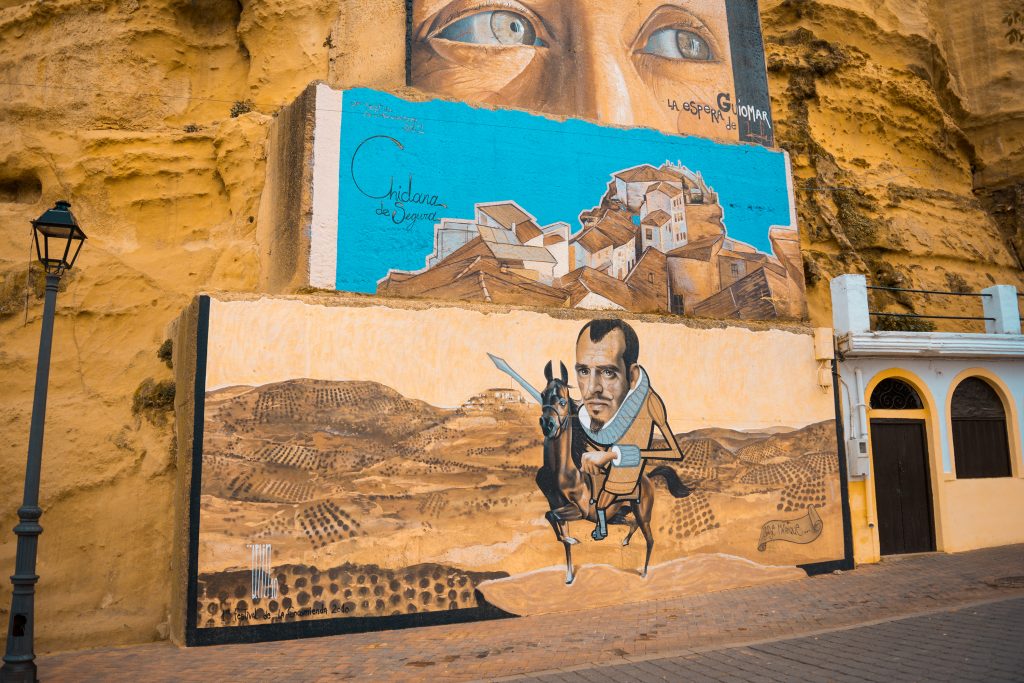
Start your itinerary in Chiclana de Segura enjoying the interpretation made by the renowned graffiti artist Miguel Ángel Belinchón (Spanish plastic artist known in the world of art as Belin) of Jorge Manrique.

The large-format, freehand painted mural, which demonstrates an incredible spatial vision, is made on the majestic rock wall that has historically protected this town, which defies an impossible geography.

The entrance tunnel to the town was built in 1950 by the engineer Manuel Tercero Sánchez. Inside, there are 2 plaques commemorating this extraordinary feat of engineering.

The impressive graffiti was made in the First Festival of the Encomienda, in 2010. In its upper part you can see the waiting of Guiomar de Castañeda, the poet’s wife, with a close-up of her eyes and in the lower part of a Quixotic Jorge Manrique with Chiclana in the background.
No category

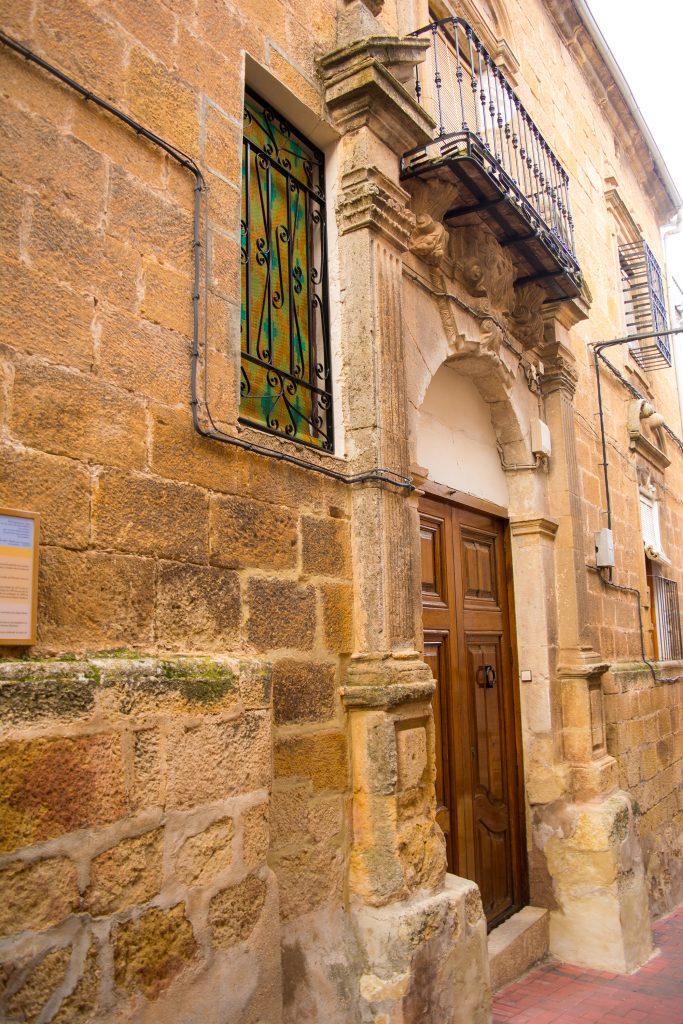
Palace of the Encomienda, home of Jorge Manrique

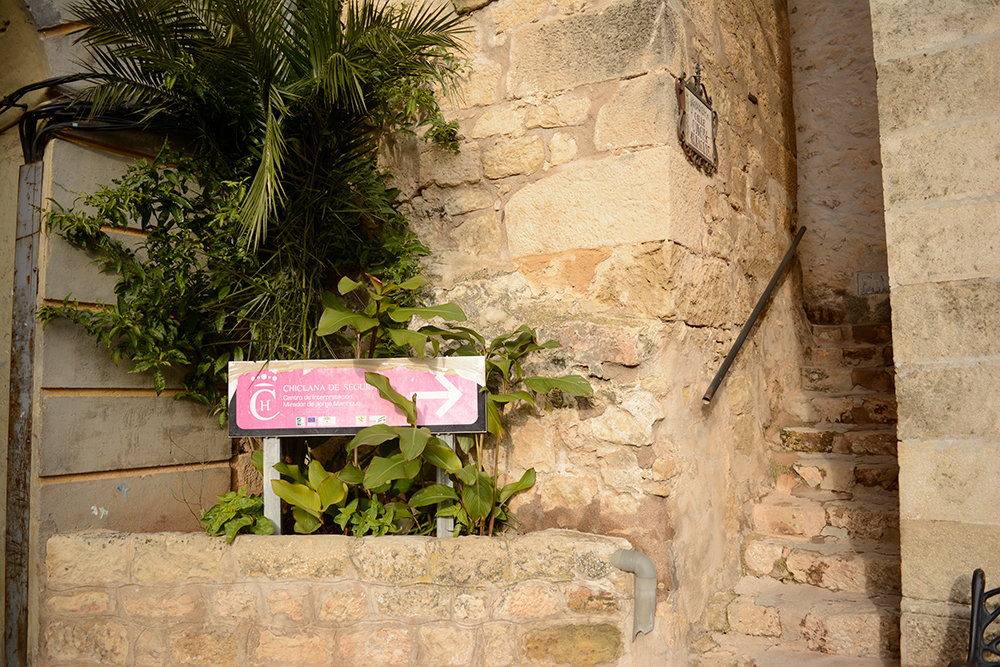
After contemplating the graffiti, enter the Historic Center of Chiclana through the audacious tunnel excavated in the imposing rock and approach the nearby Palacio de la Encomienda, where the Manrique family was housed, as Commander of the Order of Santiago.

It is located a few meters from the Belin mural, entering the Historic Center of Chiclana through the tunnel excavated in the rock and which leads to the Plaza de la Constitución, the nerve center of the town and where one of the most distinguished monumental buildings, the Church of San Pedro, from the 17th century, is located.

Continuing through the square towards Calle Real, we come across Palacio de la Encomienda (Palace of the Assignment), named so since it was intended for administration functions of the Assignment, in addition to being used as a home. The Manrique family is thought to have been staying here for some time.

This palace is also known as the House of the Inquisition, since it was also the seat of this religious court.

Architecturally speaking, the palace presents a portal in the lower body, with a semicircular arch with a raised key, smooth jambs and grooved pilasters and capitals on basements ; on the second floor, a lintelled balcony, boxed pilasters, a split pediment, little pinnacles with balls and, topping the upper floor, a cornice. The good ashlar masonry and the rectangular patio are also striking due to their footings, wooden beams and Doric columns.

No category

Interpretation Center “Mirador de Jorge Manrique”

The Interpretation Center “Mirador de Jorge Manrique” is the only one dedicated exclusively to the warrior poet, with the exception of the Jorge Manrique Museum in Santa María del Campo Rus (Cuenca), where the warrior poet died after being wounded in combat in the vicinity of the castle of Garcimuñoz.

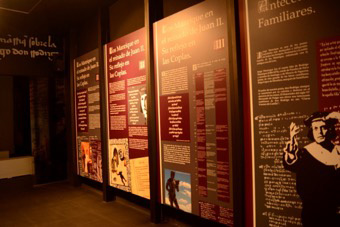
Here you can enjoy a complete vision of the life and work of the author and where you will delve into his facets as a man at arms and poet: family background, the development of his work and the impressions and influences he has had on other authors of the standing of Unamuno, Azorín or Machado.

The Interpretation Center “Mirador de Jorge Manrique” is an element of extraordinary cultural interest for all those interested in the author and, therefore, a must visit.

No category

Chiclana de Segura castle, viewpoint

There is no better way to finish the author’s literary route in Chiclana than visiting the remains of the castle.

Located at the highest and most inaccessible point of the town, the castle has been declared an Asset of Cultural Interest since 1985.

Although barely some paintings of its walls, towers, cistern and rooms are preserved, it has one of the greatest panoramic views that can be enjoyed today, reaching up to four different provinces (Ciudad Real, Albacete, Granada and Jaén).

There are also numerous geographical features such as Sierra Morena, Sierra de Segura, Sierra de Alcaraz or Sierra Nevada.

The castle of Chiclana de Segura, of Arab origin and built in the 12th century, stands out above the buildings, which made it almost impregnable at the time of the

Reconquest. A feat that Fernando III achieved around the year 1235. A short time after that he handed over the castle to the Order of Santiago, which turned it into head of the Montizón-Chiclana Assignment and the reason why Jorge Manrique resided in the municipality, being appointed Commander of the Order.

Jorge Manrique himself may have commissioned a series of works in the fortress: “a spiral staircase for a false door, two corbels, a cellar, a cupboard for a bookstore” …

It is plainly obvious that Jorge Manrique refers to this fortress in his poem Castle of Love.

II

(…) named fortress

is in the high alcoves

of a slope,

on a sliced rock,

massive all of love,

very well placed (…).

Without a doubt, it is well worth going to Chiclana de Segura and going up through its narrow and steep streets to enjoy this visual spectacle (it also has a panoramic elevator – the only one in the province – to directly access the upper part of the castle) .

Events

Festival de la Encomienda (held in July)

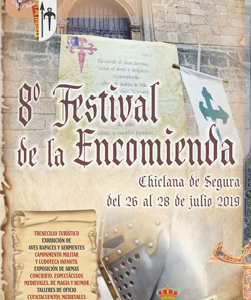
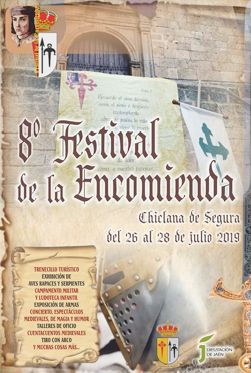
Since 2010, the Encomienda Festival has been held in Chiclana de Segura, linked to the figure of Jorge Manrique. It is usually carried out for three days in the month of July and the activities are carried out throughout the day.

During these days, the streets of the municipality go back to the Middle Ages with a complete program that includes a medieval market, parades, music, poetry, storytelling, re-enactments, medieval fights, craft workshops and concerts, among other activities.

A festival that is becoming more consolidated year by year. An excellent pretext to visit Chiclana de Segura.

Address: Urban nucleus of Chiclana de Segura CP 23264, Chiclana de Segura (Jaén).

Geolocation: Latitude: 38.312637, Longitude: -3.042998

Organizing entity:

Chiclana de Segura City Council. information: 953 46 63 00

http://www.chiclanadesegura.es/

No category

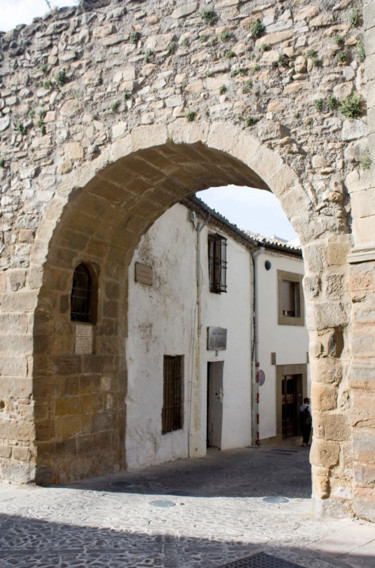
The Arch of Barbudo

While you enjoy in wandering through the marvelous Old Town of Baeza, stop by the Arch of Barbudo.

This stone arch is what remains of one of the main access gates to the city. Its real name is Arco de San León, in honor of the Franciscan convent and former hermitage and later changed its name for the Arch of Barbudo(“Puerta del Barbudo”). The reason is given by the Portuguese Martín Yánez de la Barbuda, Master of the Order of Alcántara, who in 1394 passed through it with a large army to fight against the Muslims from Granada, being defeated and killed.

It is also the gate through which Jorge Manrique and his allies are supposed to have entered in the fight against Diego Fernández de Córdoba.

Through this gate, built in masonry, opening an opening with a semicircular arch of radial voussoirs and narrow ashlar jambs, one entered the Barbacana , a defensive space that remained between the walls.

No category

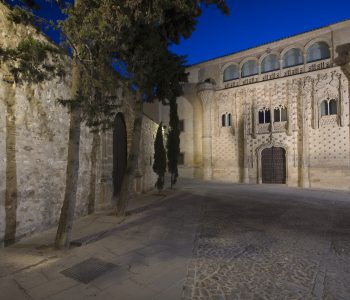
Jabalquinto palace

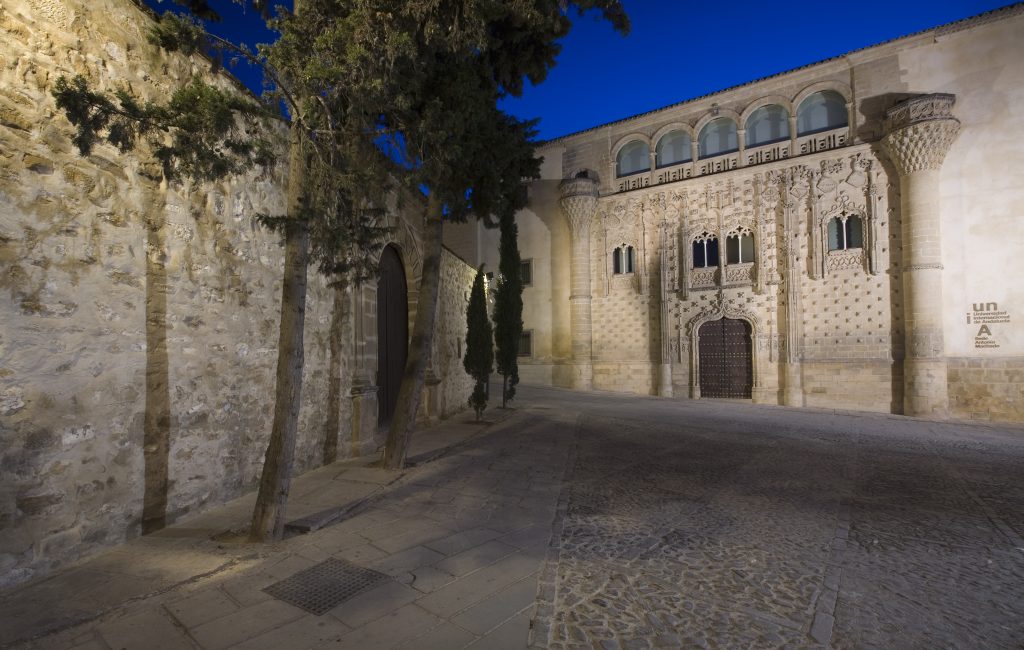
This Palace (which today is the headquarters of the International University of Andalusia) was ordered to be built at the end of the 15th century by Juan Alfonso de Benavides Manrique, Lord of Jabalquinto, whose son Manuel married Luisa Manrique, daughter of our beloved warrior poet.

This family bond is the fact that links Jorge Manrique with this space in Baeza. When the author visited the city, he was a guest at the Palace on more than one occasion. A family relationship that compelled him to take part in the fight against Diego Fernández de Córdoba, being defeated and imprisoned for a time Baeza.

The most striking thing about this Palace is the majestic Elizabethan Gothic decoration of its main façade, where its beautiful windows and prominent diamond points stand out. The patio with two floors of semicircular arches on slender columns is also sumptuous.

No category

Basílica of San Ildefonso

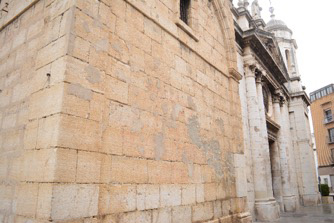
This Basilica, declared a Minor Basilica in 2010 by Pope Benedict XVI, dates back to the 13th century and its temple is made up of three facades: the oldest, in the Gothic style, is the one at the back of the church; the lateral portal, in the Renaissance style and the main portal (the last to be built) in the neoclassical style.

What links this temple to the figure of the poet Miguel Hernández is that the damage caused by shrapnel can still be seen on the façade and it is an excellent place to contextualize why Miguel Hernández arrived in Jaén.

Residence of the poet and headquarters of the Speaker of the South Front

The space in the city that is most closely related to Miguel Hernández is the place where he moved to live when he arrived in the capital and where he lived with his wife Josefina Manresa.

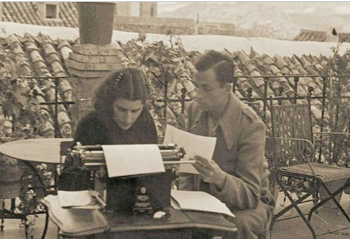
This house is located at number 9 Calle Llana –today Francisco Coello, number 9–, Palacio de los Marqueses de Blanco Hermoso (there are several photographs where the couple is on the roof typing or doing other tasks).

It is interesting that the building, in addition to being his home, was also the headquarters of the Commissariat and where the Speaker of the South Front was located. Currently the building is a private home and cannot be visited. A plaque on the façade is the only thing that evokes the significance of this building.

There are many photographs, not only with his wife, but also others, both inside and on the roof where other members of the Commissariat appear, so it must have been a very busy place.

No category

Residence of the poet and headquarters of the Speaker…

El espacio de la ciudad que guarda mayor relación con Miguel Hernández es la morada donde reside cuando llega a la capital y donde convive con su esposa Josefina Manresa.

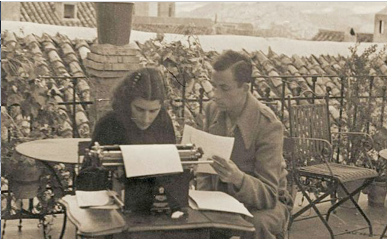
Esta vivienda se sitúa en el número 9 de la calle Llana –hoy Francisco Coello, número 9–, Palacio de los Marqueses de Blanco Hermoso (existen varias fotografías donde el matrimonio se encuentra en la azotea escribiendo a máquina o en otros quehaceres).

Se da la curiosidad de que el edificio, además de su vivienda, también era la sede del Comisariado y donde se localizaba el Altavoz del Frente Sur.

Actualmente el edificio es una vivienda particular y no se puede visitar siendo una placa en la fachada, lo único que evoca la importante trascendencia de este edificio.

Al igual que las fotografías con su esposa, existen otras tanto en el interior como en la azotea donde aparecen otros miembros del Comisariado, por lo que debió ser un lugar muy ajetreado.

No category

Plaza de Santa María (Cathedral of Jaén)

Going up Príncipe Alfonso Street, we access the Plaza de Santa María and the Cathedral of Jaén.

Due to the beauty of the environment, as well as its size, it is the best space to delve into the poet’s gaze on the bombing of Jaén, which he reveals through the articles published in Frente Sur in the following days.

The author was not in the city at that time as he was undertaking propaganda functions on the Extremadura front, but his wife was present, so the bombing must have affected him in a special way.

“(…) Jaén is bombed: the trinitrotoluene shakes and bursts even the deepest stones of the city, and the houses collapse, and the mothers do not know where to hide with their children, and the innocent dead, the shattered, are a bloody amount of heads, arms, and disconcerted flesh (…)

(…) Has Jaén already awakened from her incredulous and Moorish slumber? (…) “

Miguel Hernandez. South Front. “The bombed city”, no 7 – April 11, 1937-.

According to the historian Juan Cuevas Mata in his book “The bombardment of Jaén”, the squadrons of bombers deployed over the city, crossing it from south to north, leaving the Cathedral that was their main reference to the left (159 people died, the bombing that left the most deaths in a single action in the Spanish Civil War).